
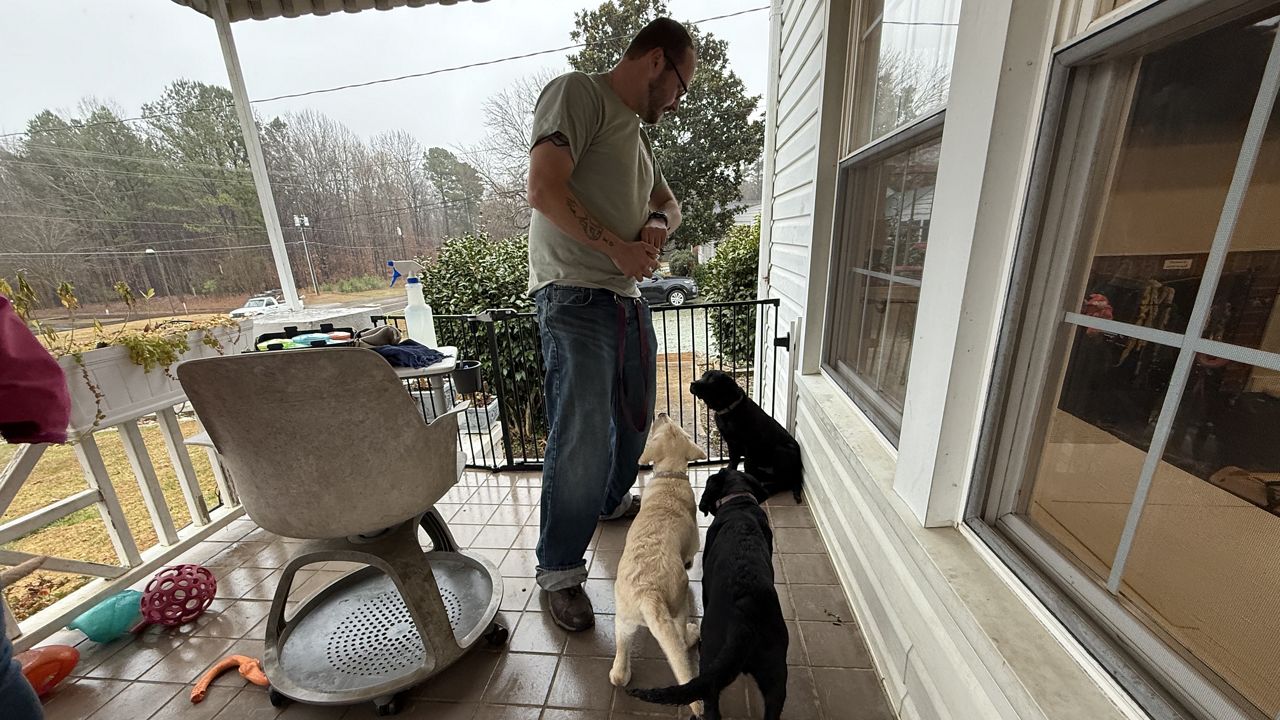
HILLSBOROUGH, N.C. — A North Carolina nonprofit is training service dogs to help people with disabilities gain independence.
On average service dogs can take up to two years to train, but the demand for them is high, as one in three adults in the state lives with a disability.
The organization Eyes Ears Nose and Paws and a partnership with Duke University students are giving both the dogs and their trainers a path toward a stronger future.
Inside the small EENP training facility, visitors are greeted with puppy sounds and wagging tails that could melt anyone’s heart. But behind all of the cuteness of those sweet faces is a serious need.
When a new litter arrives at the training site, among the new faces they’ll get to know is Ben Flagg, who is there to guide them through early lessons. Flagg knows firsthand how the program At Both Ends of the Leash can change lives, because it changed him.
He began training dogs while being incarcerated, learning skills that helped him rebuild his life. After being released in June, he now works full-time with the program.
When asked how he discovered the program, he recalled his first encounter — sitting in his cell he looked out of the window and saw puppies running around. He said his first thought was, “Why are puppies in a prison?” And from there his journey began.
“You’re training these dogs to help other people… and I was like, OK, that sounds good,” he said. “And I developed a philosophy of, OK, you can’t help yourself unless you’re helping somebody else.”
Flagg said that the puppies are a lot like babies, just working to get to know you and let you know what they need.
“If a dog’s vocalizing, it’s either telling you it has a need that needs to be met, it’s excited or scared,” Flagg said.
From the moment each dog arrives, they enter a community-wide training network that includes not only prison-based training programs but Duke University students. The goal: tailor each puppy’s skills to meet the specific needs of future owners, whether that means mobility support or medical alert work.
The co-founder and executive director of the nonprofit, Maria Ikenberry, says these puppies allow those with disabilities to have independence.
“Whether it is helping them get out into public, opening doors, whether it is helping them stay safe from a medical condition, what it’s doing is helping them feel confident being out in the community,” Ikenberry said.
Watching the transformation of the puppies, the men in the program and the students has become deeply meaningful for her.
“It’s incredibly fulfilling to hear the power that this work, the therapeutic work of training the dogs, has for the men who are participating in the ABEL program,” she said.
Flagg agreed, emphasizing that the impact goes both ways.
“I think my biggest take out of this whole job is helping somebody else… giving back to the community,” Flagg said.
Follow us on Instagram at spectrumnews1nc for news and other happenings across North Carolina.