In 1978, four years before yours truly was even born, the charity Dogs Trust came up with the slogan “A dog is for life, not just for Christmas” in the hopes of reminding people that the adorable little doggy wrapped up with a bow was still going to need toilet training while you’re still nursing the Mary, Mother of God of all hangovers.
That reminder (and me) has now aged well into its forties. Still, over-optimism about exactly what owning a pet involves – and the cost – continues to lead to dispiriting numbers of animals being handed over to shelters, given away online, or simply abandoned. Watching the Christmas edition of The Dog House, Channel 4’s inspired take on Pet Rescue meets First Dates, I was brought to tears by a pair of sweet girls who had simply been tied to a tree and left – and then again, when they were on their way to new homes by the episode’s end.
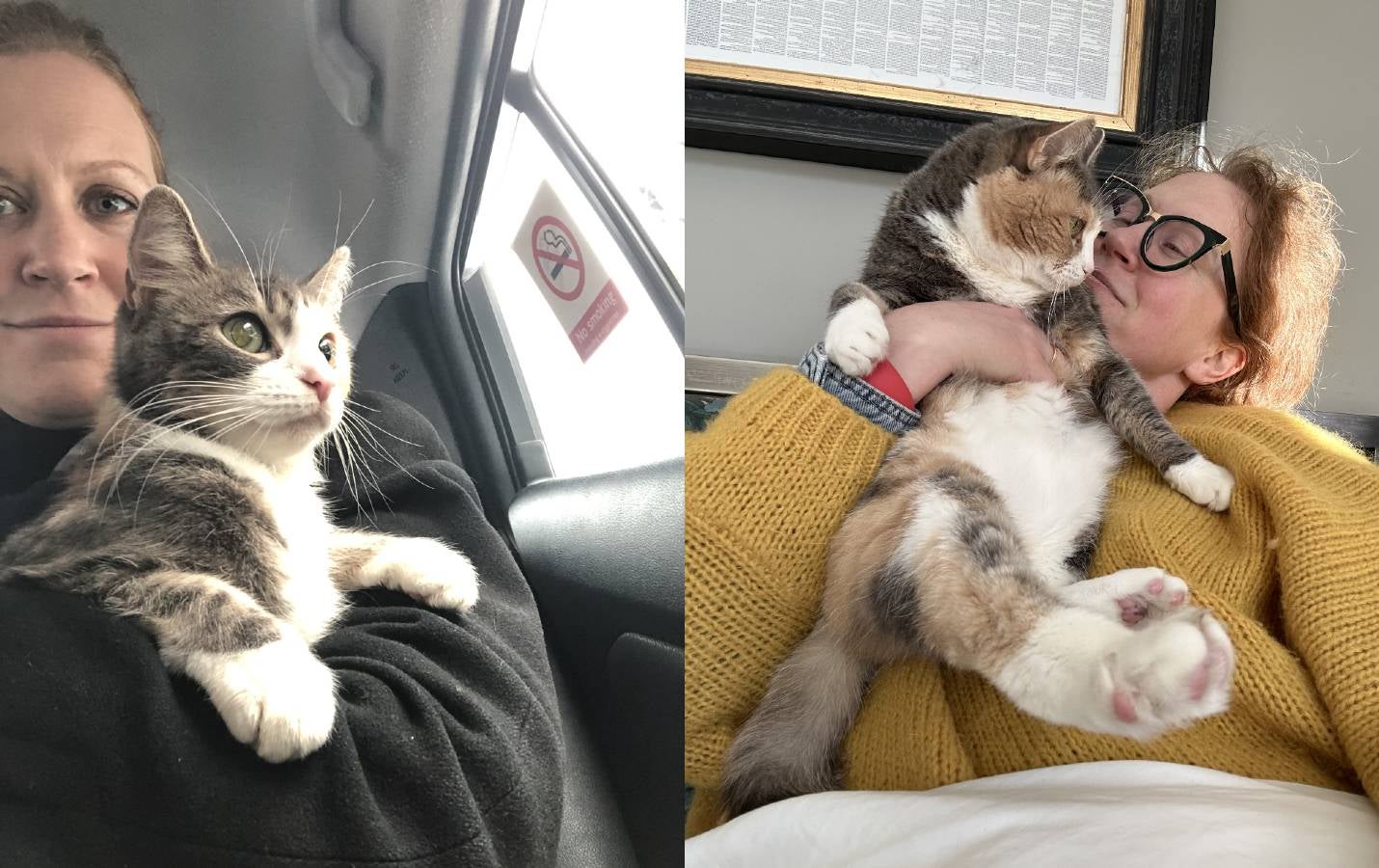
I know the rules, and yet my own pets have both broken them, with the happiest outcome. In 2019, I came out of a therapy session helping me to deal with failed IVF, which meant my husband and I would not have children, and I encountered a very thin, very small calico cat near Oxford Street. I’d worked in the area for 15 years and never seen a cat of any kind, so I called an Uber and took her to the vet to be scanned for a microchip. No microchip, and her teeth were broken – so another very kind Uber driver took us to my vet in south London, where she had an operation and recovered in our spare room.
My husband, whose main exposure to cats to this point had been through my exceedingly stern Battersea rescue, Ambridge, was so delighted to meet a non-violent specimen that we kept her. Genevieve is now three times the size and snoring daintily next to me like a polite dragon.
In 2020, at the height of Covid and as I was approaching one year sober, we discussed the idea of getting a dog, and I started writing what were essentially Ucas essays for adults to various rescues about why we should be considered to adopt X, Y or Z dog. Luckily for the dogs, if less for me, it was a dog’s market. Each one I enquired about who might enjoy living in zone 3 London was snapped up for a fabulous life in the country.
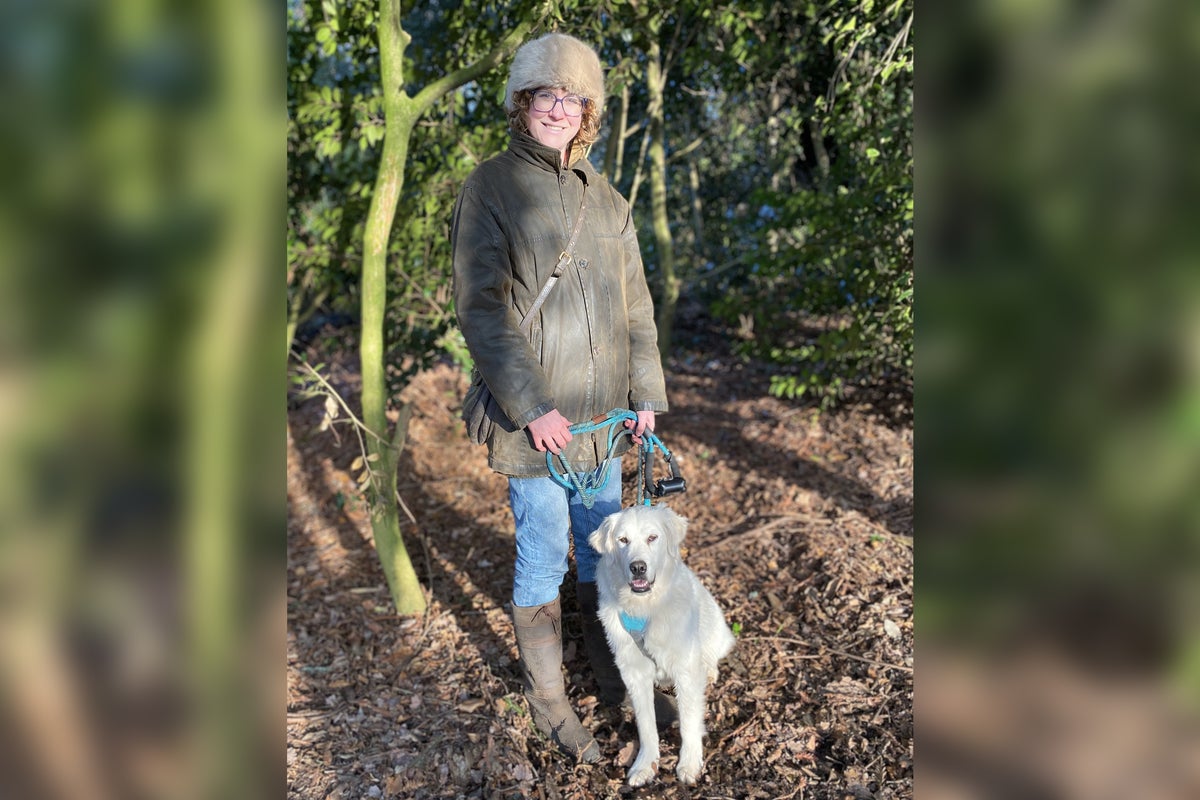
Eventually, I turned to Instagram for leads, and a friend put me in touch with the British charity Serbia’s Forgotten Paws, which rehomes dogs to within a two-hour drive of its base in Cobham, Surrey. After a WhatsApp home tour – we had to raise our garden fences, something which makes me laugh now as Sybil’s single brain cell is unable to compute how to walk over so much as a flattened cardboard box – we were approved, and matched with “Lola”, a golden retriever who had been abandoned in the middle of nowhere that summer. After some worries about whether the Eurostar would be able to transport her due to Covid, we collected her on 12 December and renamed her Sybil, after a Terry Pratchett character.
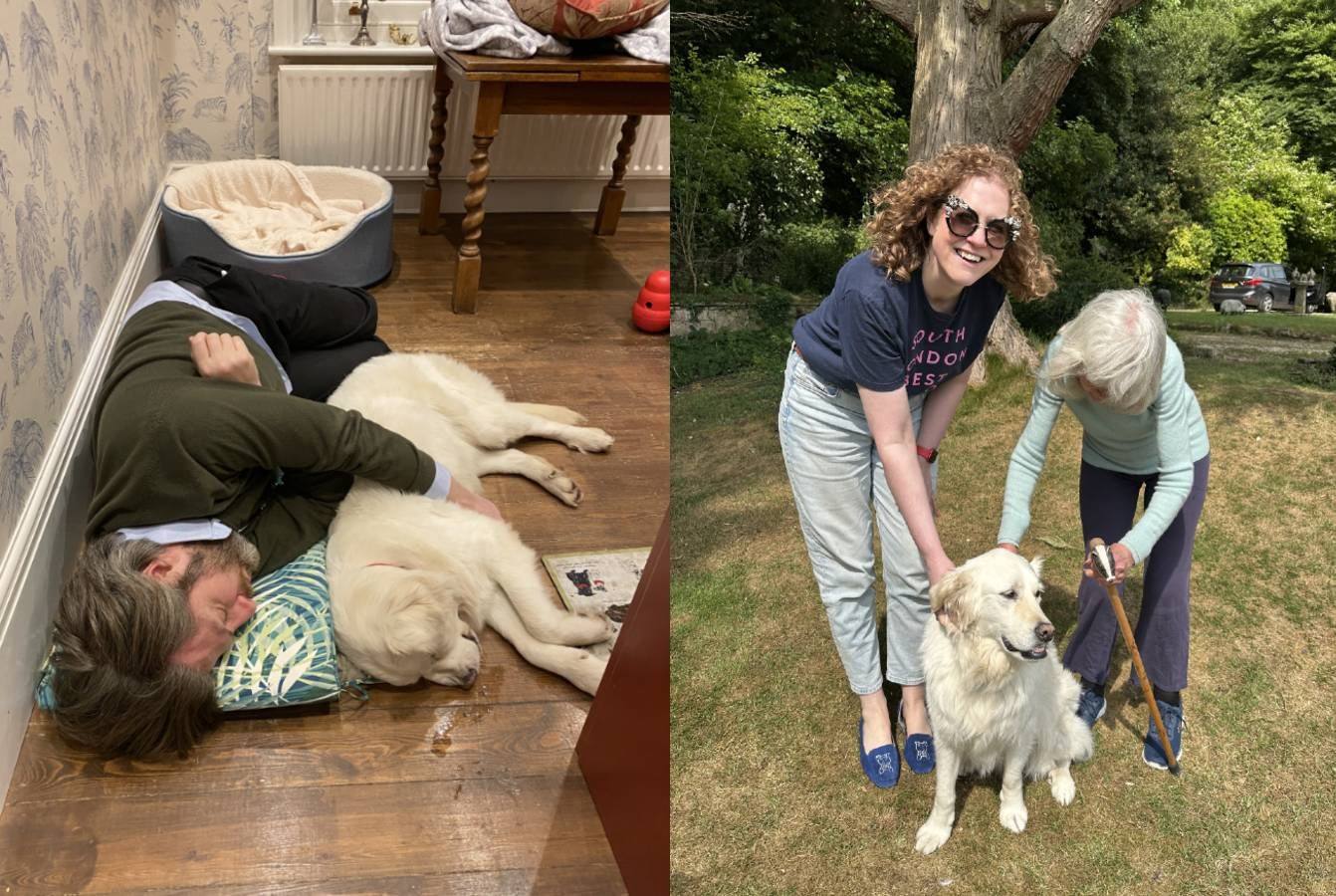
As one of the (many) conditions of adopting Sybil, the charity made me join a Facebook group which had been set up in 2012 to counter misinformation on social media. This group, run by positive British dog trainers and called Dog Advice Training and Support, turned out to be an absolute godsend for our Christmas. Sybil was understandably so anxious that she wouldn’t settle. Rather than giving up, thanks to the group, we had a clear outline on how to settle her and what she was telling us, which meant that by Christmas Eve, my husband and I were back in our own bed, rather than taking it in turns to sleep on a lilo in the kitchen because the cats had rightful dominion over our bedroom.
I completely understand why so many people, however well-meaning, have ended up handing back puppies that have grown into unmanageable teenagers in the new year. Animals are hard work, just like people. Unconditional love, my foot! They depend on you, and you, in turn, owe it to them to earn their love and trust and know how to read their body language and temperament. If you don’t teach yourself how to understand them, you’re going to have a bloody horrible time, no matter if they’re a pedigree pup or a rescue mutt. Even cats aren’t totally self-running, although less work than a dog.
I’ve bought the group’s training book for my brother for Christmas, as he is dreaming of a Bernese mountain dog – like me, my brother is enormously tall and would not suit a dachshund. Whatever time of year he gets his dream dog, as long as he – and we – are all prepared, any nightmare periods will be completely manageable.
Merry Christmas to you and your animal family, from me, Sybil and Genevieve.
Dog Advice Training and Support’s book, ‘Dog Training and Behaviour Solutions’, is available to buy