
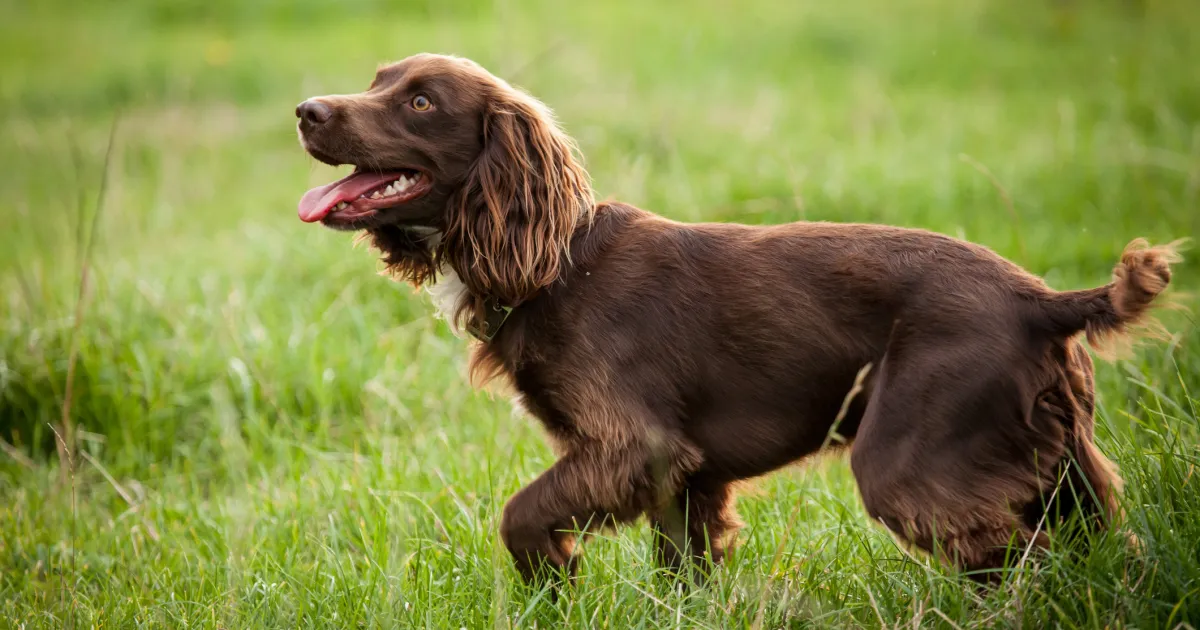
The Boykin Spaniel has an interesting history that dates back to the early 20th century in South Carolina, United States. It was developed specifically for hunting purposes, particularly in the swamps and waterways of South Carolina.
The breed’s origin can be traced to a small stray spaniel-type dog named “Dumpy” who was found by Alexander L. White in the early 1900s. Recognizing the dog’s potential as a hunting companion, White brought Dumpy home and began training him. This talented little dog caught the attention of Whit Boykin, a close friend of White, who recognized the value of Dumpy’s hunting abilities and decided to breed him.
Whit Boykin, with the help of other local hunters and dog enthusiasts, embarked on a selective breeding program to develop a breed that could excel in the challenging hunting conditions of South Carolina. They crossed Dumpy with other spaniel breeds, such as the American Water Spaniel, Springer Spaniel, Chesapeake Bay Retriever, and Cocker Spaniel, to create a versatile and skilled hunting dog that would be highly adaptable to the region’s terrain and climate.
Over time, the breed’s reputation grew as the Boykin Spaniel proved to be an exceptional hunting companion. The dogs were particularly adept at retrieving waterfowl and turkeys in the dense swamps and marshes of South Carolina. As their popularity grew, they became the preferred hunting dogs for many hunters in the region.
In 1977, the Boykin Spaniel Society was founded to promote and preserve the breed. The breed’s official recognition by the American Kennel Club (AKC) came in 2009, solidifying its status as a recognized breed in the United States.
Today, the Boykin Spaniel continues to be cherished for its hunting prowess and versatility, as well as its friendly and sociable nature. While still widely used as a hunting dog, the breed has also gained popularity as a beloved family companion and show dog, admired for its intelligence, loyalty, and affectionate personality. The Boykin Spaniel’s rich history and dedicated enthusiasts have ensured its survival and continued recognition as a remarkable sporting dog breed.